Skip to content
The fleet

Five airframes, one field

Four Cessna 172s and one Piper Seneca III: a fleet you can earn a certificate in and then keep growing into. Students train across the whole line — the 160 HP VFR trainers for early lessons, the glass-panel and IFR-certified 172s for instrument work, and the Seneca for the multi-engine rating.

The flight line

Every airplane in the fleet.

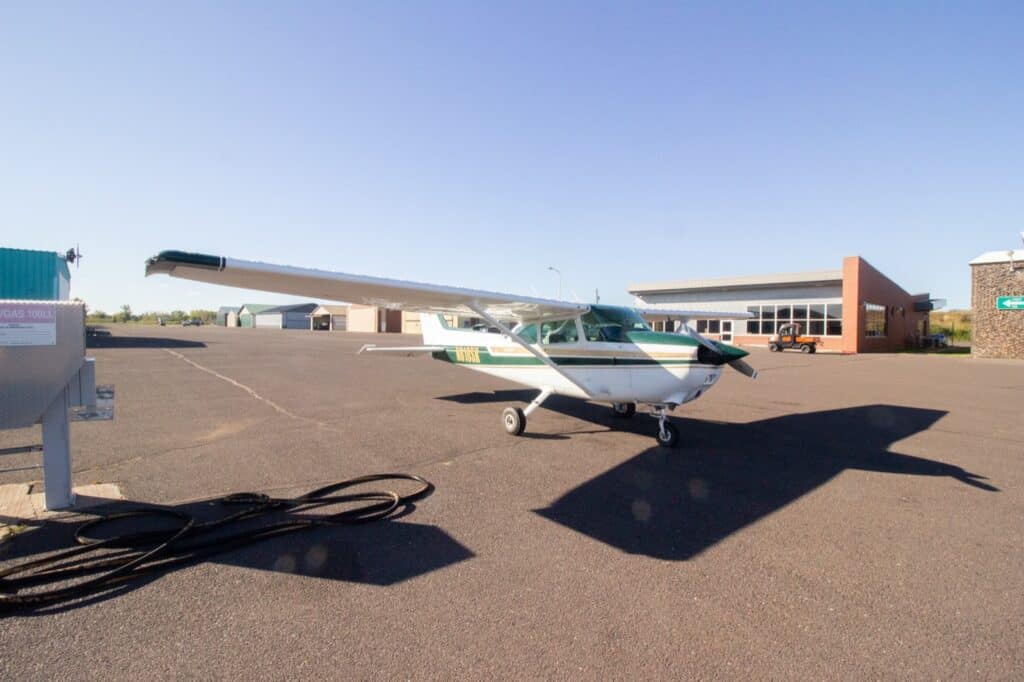
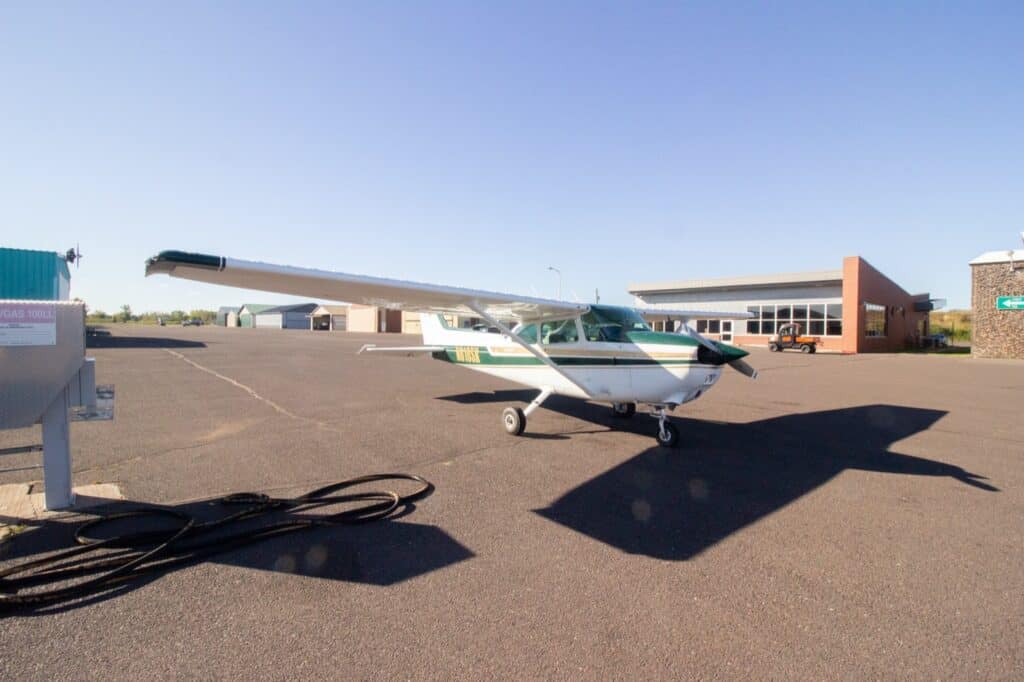
The green-and-white Cessna 172 N616SK parked on the ramp at KSUW.
N616SK

Cessna 172 Skyhawk

N616SK — glass-panel trainer

A 180 HP Cessna 172 with dual Garmin G5s and a Garmin GTN 375. This is the airplane that makes the step from Private into instrument work feel like a continuation rather than a restart. $155/hr wet.

Registration
N616SK
Seats
4
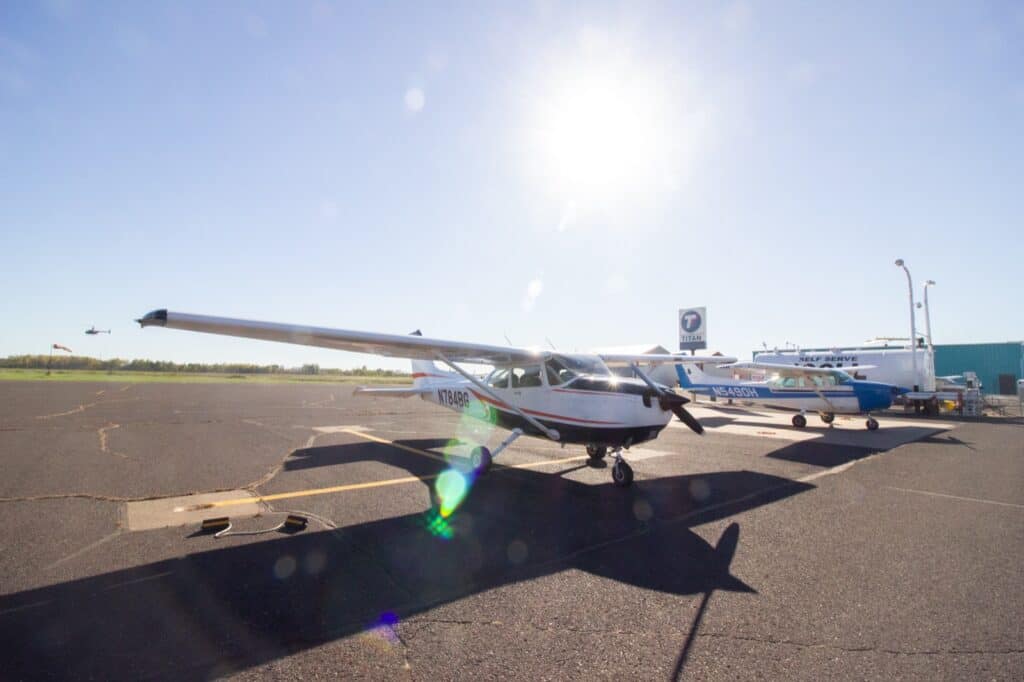
The Cessna 172 N784BG on the ramp at KSUW, the fuel farm and a second Cessna behind it.
N784BG

Cessna 172 Skyhawk

N784BG — ifr certified

160 HP and IFR certified, with a Garmin G500 PFD/MFD and a Garmin 430W. This is where instrument students spend their approaches. $155/hr.

Registration
N784BG
Seats
4
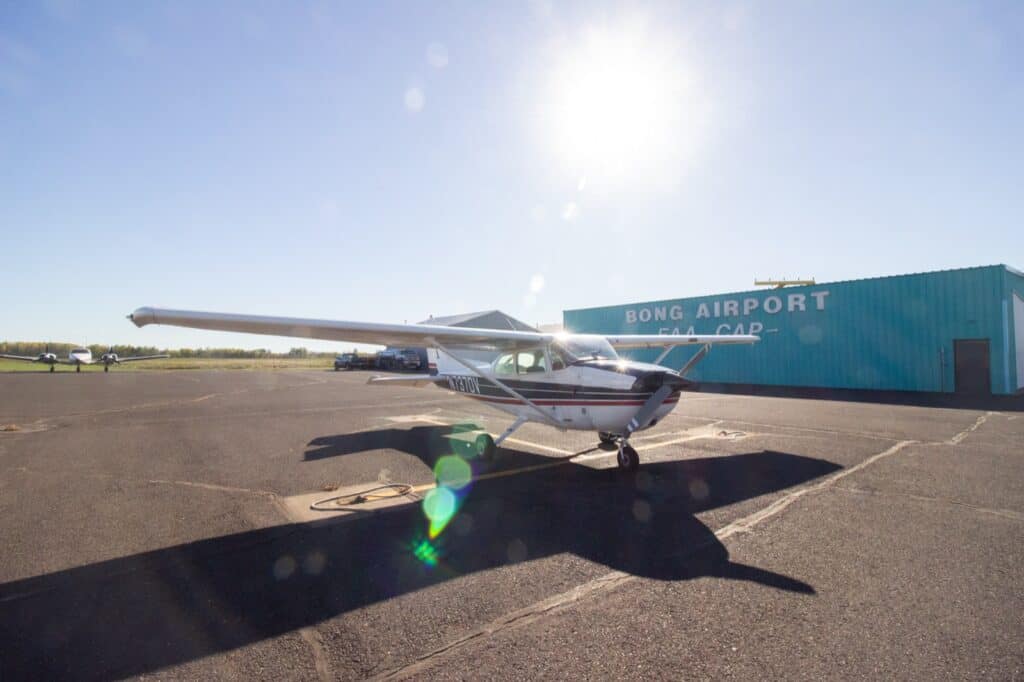
A Cessna 172 parked in front of the Bong Airport hangar at KSUW, into a low sun.
N737DV

Cessna 172 Skyhawk

N737DV — 180-horse vfr trainer

180 HP, VFR only, and it makes no claim to be anything else — pattern work, cross-countries, and the hours that turn into a certificate. $145/hr.

Registration
N737DV
Seats
4
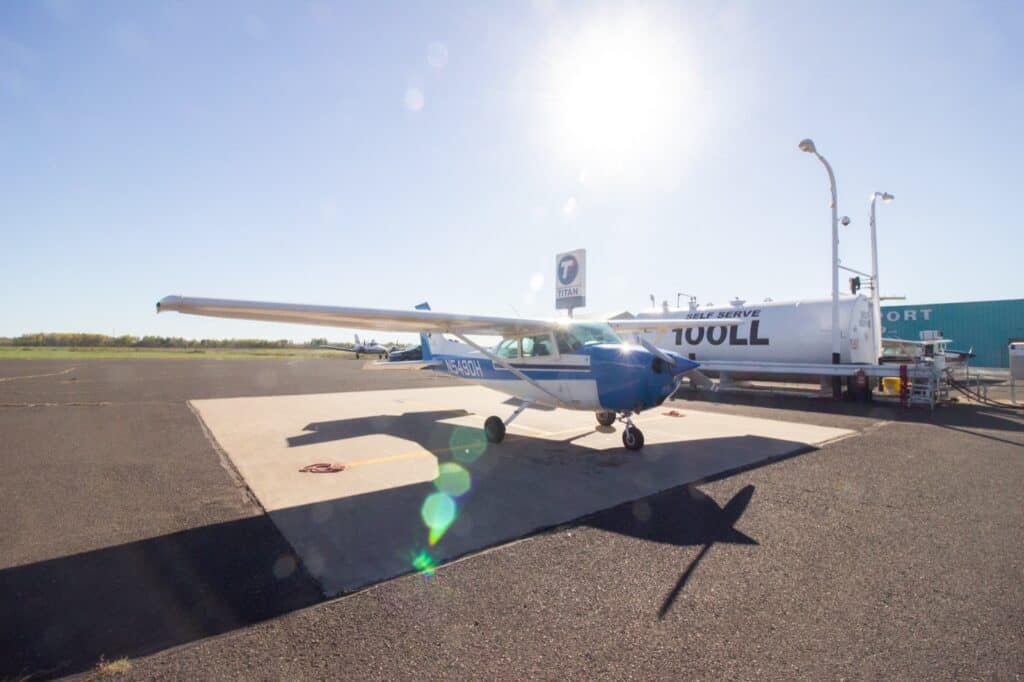
The blue-and-white Cessna 172M N5490H at the self-serve 100LL pump at KSUW.
N5490H

Cessna 172M Skyhawk

N5490H — where most students start

160 HP, VFR only, steam gauges, and the least expensive hour on the field at $145/hr wet. Straightforward systems and everything a Private Pilot certificate actually asks of you.

Registration
N5490H
Seats
4
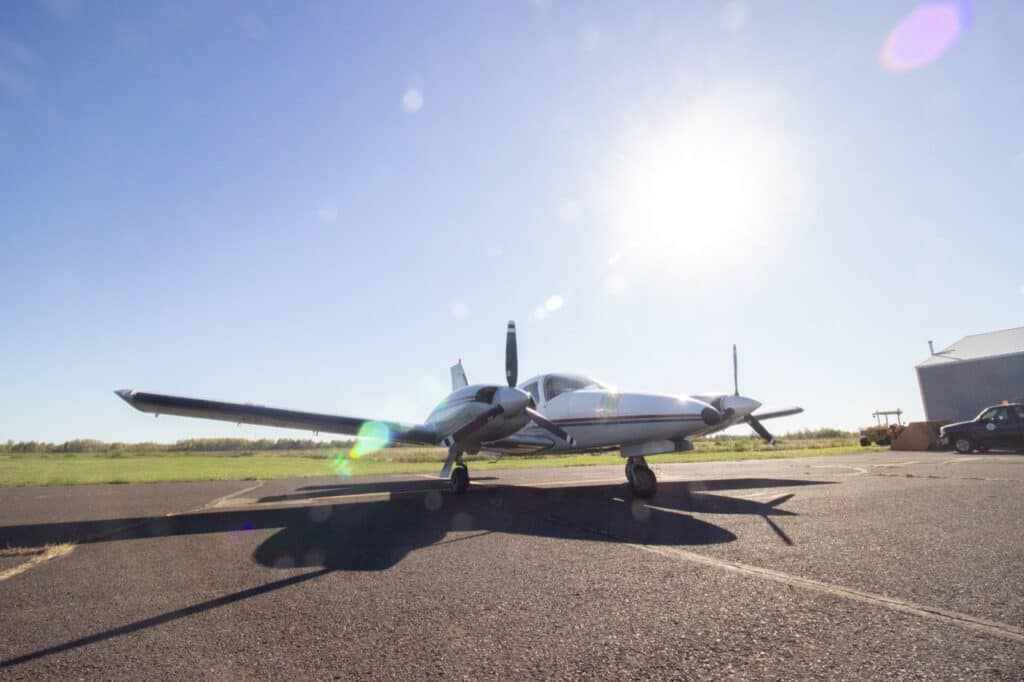
The twin-engine Piper Seneca on the ramp at KSUW, seen head-on with the sun behind it.
N325TT

Piper Seneca III

N325TT — multi-engine training

Our twin: a 1983 Piper Seneca III with a Garmin 375 and a King 225 autopilot with flight director. This is where the Multi-Engine rating happens, and where a commercial student finds out what a second engine really asks of a pilot. $395/hr + tax, wet; dual instruction $85/hr.

Registration
N325TT
Year
1983
Seats
6
The standard

Maintained in our own hangar — which is why the airplanes are actually here.

Maintenance is in house. Nothing gets ferried out to a shop three states away and disappears for a month, and that single fact is the biggest reason a lesson gets cancelled at other schools and doesn’t get cancelled here.

Flying more than one airplane makes a better pilot. Steam gauges and glass, 160 and 180 horsepower, VFR and IFR — by the time you take a checkride you have adapted to a panel you didn’t memorize, which is exactly what the rest of your flying will ask of you.

  1. Four Cessna 172s — 160 and 180 HP, VFR and IFR certified
  2. 1983 Piper Seneca III for multi-engine training
  3. Glass and steam gauges: dual G5s, Garmin G500, GTN 375, 430W
  4. PFC DCX Max advanced aviation training device — $65/hr

See the training programs these aircraft fly

Questions about the fleet

What aircraft will I train in?
A Cessna 172. We have four of them, from a 160 HP VFR trainer up to a 180 HP airplane with dual Garmin G5s and a GTN 375, plus an IFR-certified 172 with a Garmin G500. Multi-engine training happens in our 1983 Piper Seneca III.
How old are the airplanes, and how are they maintained?
Maintenance is done in house, in our own hangar here on the field, on the inspection schedule every training aircraft follows — a 100-hour inspection for aircraft flown for hire, and an annual inspection every twelve months. Keeping that work here rather than sending airframes away is the reason our aircraft downtime stays short.
How many aircraft do you have, and will I always get one?
Five: four Cessna 172s and a Piper Seneca III, plus a PFC DCX Max training device for procedures. It is a small fleet for a small school, lessons are booked ahead, and in-house maintenance is what keeps the airplane you reserved from disappearing to a shop for a month.
Will I train in the same airplane every lesson?
Usually early on, and deliberately not forever. Consistency helps at the start, so most students spend their first lessons in one airplane; later we move you between our 172s on purpose, because a pilot who has only ever flown one panel isn’t really finished.
Do the aircraft have glass cockpits or steam gauges?
Both, on purpose. N616SK has dual Garmin G5s and a Garmin GTN 375, and N784BG is IFR certified with a Garmin G500 PFD/MFD and a 430W; N5490H and N737DV are conventional steam-gauge VFR trainers. Learning across both makes you a considerably more adaptable pilot.

Come see the airplanes

Book a Discovery Flight and take the controls of one yourself — or call 715-394-6444 to talk through your training.

Book a Discovery Flight — $125 Speak to an advisor